Why Tiny Changes Beat Big Goals: Key Lessons from Atomic Habits
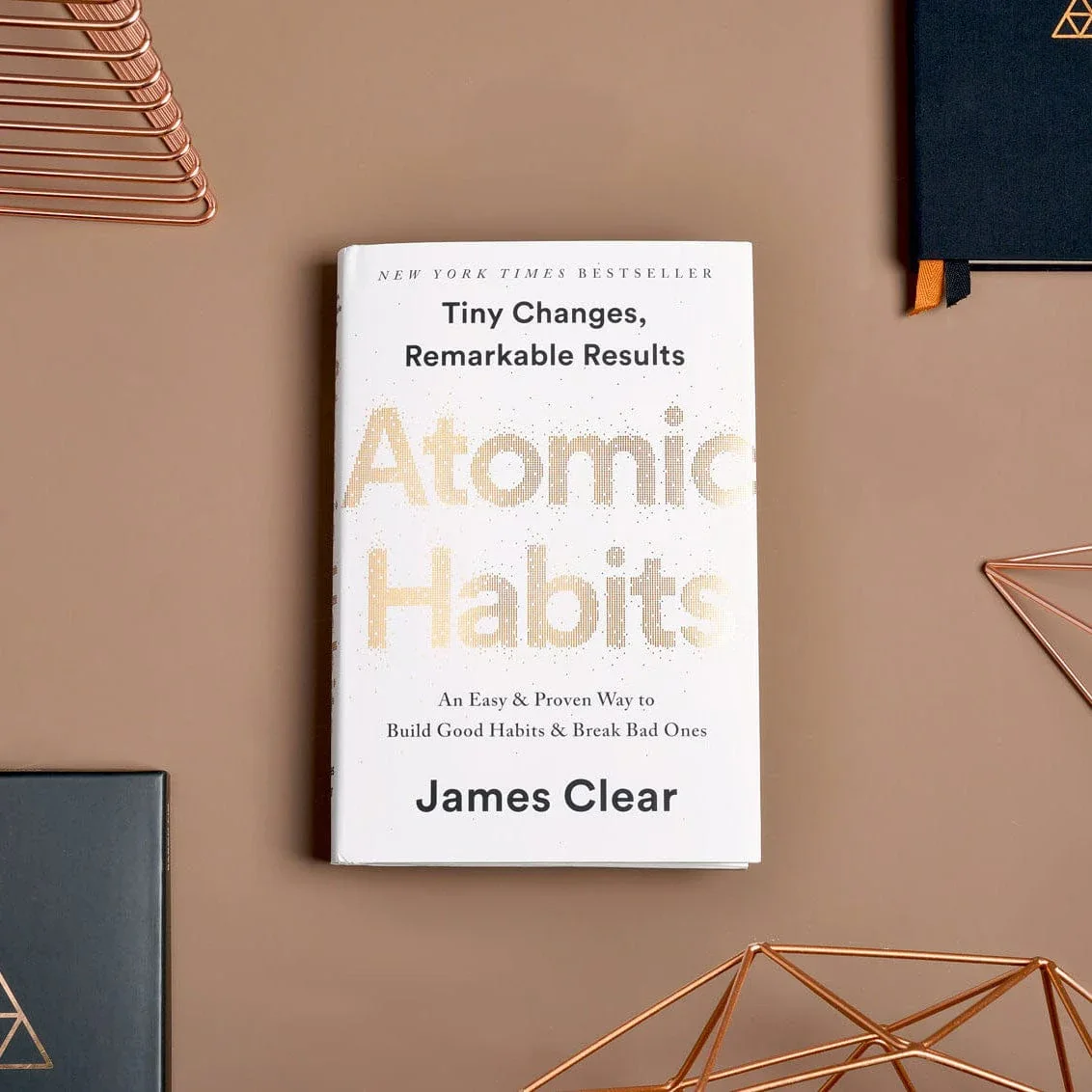
If you've ever set an ambitious goal in January and abandoned it by February, James Clear's Atomic Habits explains exactly why—and what to do instead. The book's central argument is refreshingly counterintuitive: you don't rise to the level of your goals, you fall to the level of your systems. Here are the ideas that make it one of the most useful books on behavior change ever written.
The Power of 1% Better
Clear opens with simple math: if you improve by just 1% every day for a year, you end up 37 times better. If you get 1% worse, you decline nearly to zero. Habits are the compound interest of self-improvement.
The catch is that tiny changes feel meaningless in the moment. Going to the gym once doesn't make you fit. Writing one page doesn't make you an author. Clear calls this the "Plateau of Latent Potential"—the frustrating stretch where you're doing the work but not yet seeing results. Most people quit here. The ones who succeed keep going long enough for compounding to kick in.
Focus on Identity, Not Outcomes
Most of us approach habits backward. We start with outcomes ("I want to lose 20 pounds") and hope our behavior follows. Clear argues the most durable change starts with identity.
The difference is subtle but powerful. The person trying to quit smoking says "No thanks, I'm trying to quit." The person who has changed their identity says "No thanks, I'm not a smoker." One is still negotiating with temptation; the other has already decided who they are.
Every action you take is a vote for the type of person you want to become. Don't aim to read a book—become a reader. Don't aim to run a marathon—become a runner. The goal isn't the achievement; it's the identity that makes the achievement inevitable.
The Four Laws of Behavior Change
The practical heart of the book is a four-step framework. Every habit follows a loop—cue, craving, response, reward—and each step has a corresponding law.
1. Make it obvious. Habits are triggered by cues in your environment, so design your environment to work for you. Want to practice guitar? Put the guitar in the middle of the room. Want to stop snacking? Get the chips off the counter. Clear also recommends "implementation intentions": instead of "I'll exercise more," say "I will walk for 20 minutes at 7 a.m. in my neighborhood." Specificity beats motivation.
2. Make it attractive. We're more likely to repeat behaviors we anticipate enjoying. Use "temptation bundling"—pair something you need to do with something you want to do, like only listening to your favorite podcast while exercising. Surround yourself with people who already have the habits you want; we naturally imitate our tribe.
3. Make it easy. Reduce friction. The habit that's easiest to start is the one you'll actually do. Clear's "Two-Minute Rule" is the standout tactic here: scale any new habit down to two minutes. "Read before bed" becomes "read one page." "Do yoga" becomes "roll out the mat." It sounds trivial, but the point is mastering the art of showing up. A habit must be established before it can be improved.
4. Make it satisfying. We repeat what feels rewarding. The problem is that good habits pay off later while bad habits pay off now. So add immediate rewards: track your streak on a calendar, or transfer a few dollars to a vacation fund every time you skip dessert. And never miss twice—missing once is an accident; missing twice is the start of a new habit.
To break a bad habit, simply invert the laws: make it invisible, unattractive, difficult, and unsatisfying.
Environment Beats Willpower
One of the book's most liberating ideas: people with great self-control aren't heroically resisting temptation all day. They've just structured their lives so they're rarely tempted in the first place. Willpower is a short-term strategy; environment design is a long-term one. If you're struggling with a habit, don't blame yourself—redesign your surroundings.
The Takeaway
Atomic Habits works because it lowers the stakes. You don't need a dramatic transformation, a perfect morning routine, or superhuman discipline. You need a system of small, obvious, easy, satisfying actions—repeated until they're simply part of who you are.
Start smaller than feels reasonable. Cast a vote for the person you want to become. Then do it again tomorrow.