Is Social Media Making Us Miserable? The 2026 World Happiness Report Has Answers
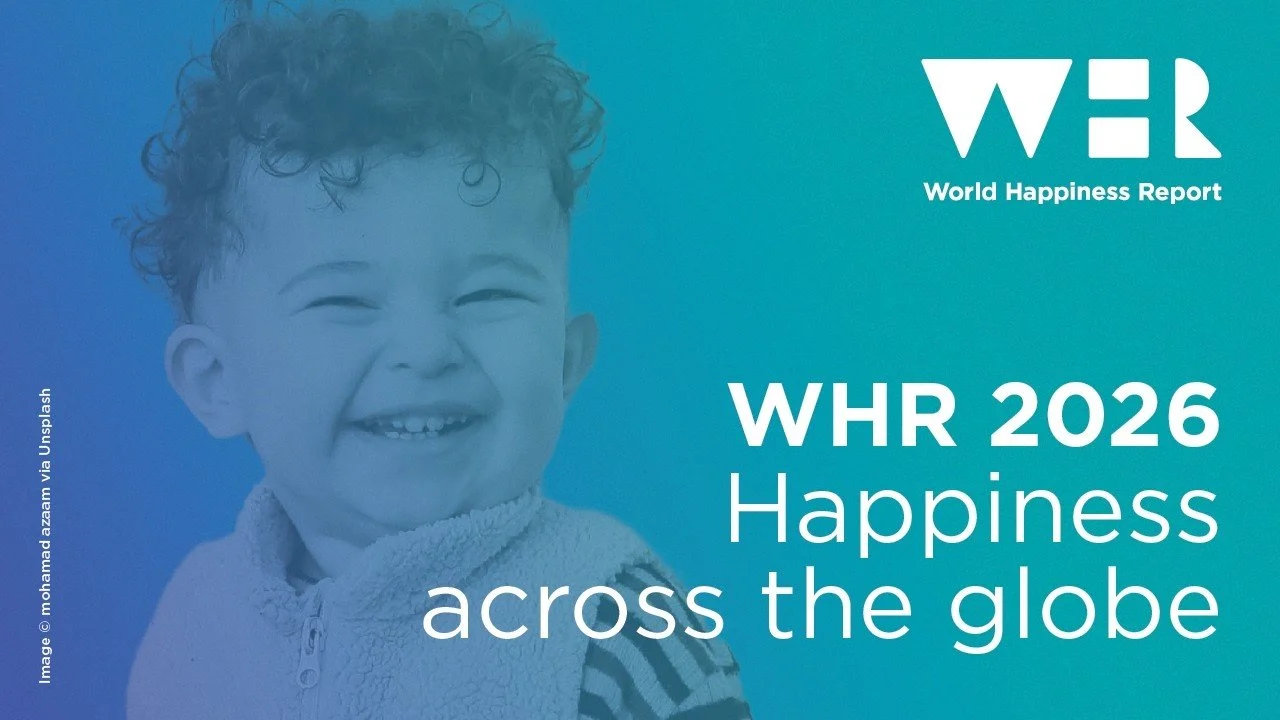
For years, the debate has raged: is social media stealing our joy, or is it simply a mirror reflecting a world that was already struggling? The 14th edition of the World Happiness Report — published ahead of the UN's International Day of Happiness — takes on that question head-on, and the answer turns out to be more nuanced than either camp would like.
The Big Picture: More Happy, But Not Everyone
First, the good news. Globally, more countries have gained in happiness than lost since 2006–2010, and Nordic countries continue to dominate the top of the rankings. Finland holds its title as the world's happiest country for a remarkable ninth year in a row, scoring 7.764 out of 10. Iceland and Denmark follow closely behind, while Costa Rica has surged to 4th place — its best-ever result, up from 23rd just three years ago.
But zoom in on the under-25 demographic, and a troubling split emerges. While young people in most countries are actually happier than they were 20 years ago, youth happiness has fallen sharply in several Western nations — particularly in the United States, Canada, Australia, and New Zealand, where life satisfaction scores among under-25s have dropped by nearly a full point on a 0–10 scale over the past decade. Meanwhile, the global average for young people trended upward. Something is happening in the English-speaking West that isn't happening elsewhere.
Notably, this is the second consecutive year that no English-speaking country has cracked the global top 10. The US sits at 23rd, Canada at 25th, and the UK at 29th.
Enter Social Media
The timing is hard to ignore: over the same period that youth wellbeing declined in these countries, social media use exploded. The report asks whether that's a coincidence — and concludes, carefully, that it probably isn't.
Across 47 countries studied, life satisfaction is highest among people who use social media minimally, and declines as usage increases — especially for girls and especially in English-speaking countries. An international survey of 15-year-olds across nearly 50 nations found that heavy social media use is associated with a meaningful drop in wellbeing, with adolescents currently spending an estimated average of 2.5 hours per day on these platforms.
Here's the twist, though: young people who use social media for less than one hour per day actually report higher wellbeing than those who avoid it entirely. Going cold turkey, it seems, isn't the answer either — those who deliberately stay off social media appear to be missing out on genuine social benefits.
It's Not Just How Much — It's What and How
Perhaps the most important finding is that not all social media is created equal. The type of platform and the way it's used matter enormously.
Platforms built around algorithmically curated content — the kind designed to keep you scrolling through an endless feed of content chosen by a computer — tend to show a negative association with wellbeing. But platforms designed to facilitate actual human connection show a positive association with happiness. The distinction is meaningful: passive consumption versus active connection.
The report also identifies what researchers call a "collective action problem" baked into social media. Most people would be better off if these platforms didn't exist, yet because they do exist, opting out means missing out on the social fabric that has moved there. It's a trap by design.
Why English-Speaking Countries Are Hit Hardest
One of the more puzzling findings is that English-speaking nations experience the steepest youth wellbeing declines despite having social media usage levels similar to other countries. Why? The report doesn't offer a definitive answer, but it points to potential cultural factors, platform design choices that may be more prevalent in these markets, and the possibility that social comparison effects are amplified in certain cultural contexts.
The gender dimension is also stark: girls appear to be disproportionately affected, a finding consistent with other research linking algorithmically driven platforms — particularly image-heavy ones — to heightened social comparison and body image concerns among teenage girls.
The Science Is Real, but Complex
The report is careful not to overstate its conclusions. While the association between heavy social media use and reduced wellbeing is found across multiple types of research — surveys, longitudinal studies, and natural experiments — the authors note that professional scientific organisations vary considerably in how they interpret this evidence, with differences in how limitations are acknowledged and how confidently conclusions are stated.
What is clear is that other factors — the quality of social connections, a sense of belonging, having people to count on — are associated with far larger changes in how people feel about their lives than social media use alone.
What This Means
The researchers' call to action is to put the "social" back into social media. That means platform design that prioritises genuine human connection over engagement metrics, evidence-based policy for protecting young users, and more research into what makes digital spaces genuinely good for people rather than merely addictive.
As report editor Jan-Emmanuel De Neve of Oxford's Wellbeing Research Centre put it, the links between social media and wellbeing "heavily depend on what platforms we're using, who's using them and how, as well as for how long." The picture is complex — but that complexity is itself the message. One-size-fits-all bans or blanket dismissals of concern both miss the point.
The scroll isn't going anywhere. But how it's built, and how we use it, matters more than we might think.
The World Happiness Report 2026 is published by the Wellbeing Research Centre at the University of Oxford, in partnership with Gallup and the UN Sustainable Development Solutions Network. The full report is available at worldhappiness.report.