How to Use Ikigai for Career Planning: A Step-by-Step Guide
Finding the right career path can feel overwhelming. You might have skills that don't align with your passions, or dreams that seem impractical given market realities. This is where ikigai—a Japanese concept that translates to "reason for being"—offers a refreshingly holistic approach to career planning.
Rather than choosing between what pays well and what makes you happy, ikigai helps you find the sweet spot where multiple dimensions of fulfillment intersect. Here's how to use this powerful framework to guide your career decisions.
Understanding the Ikigai Framework
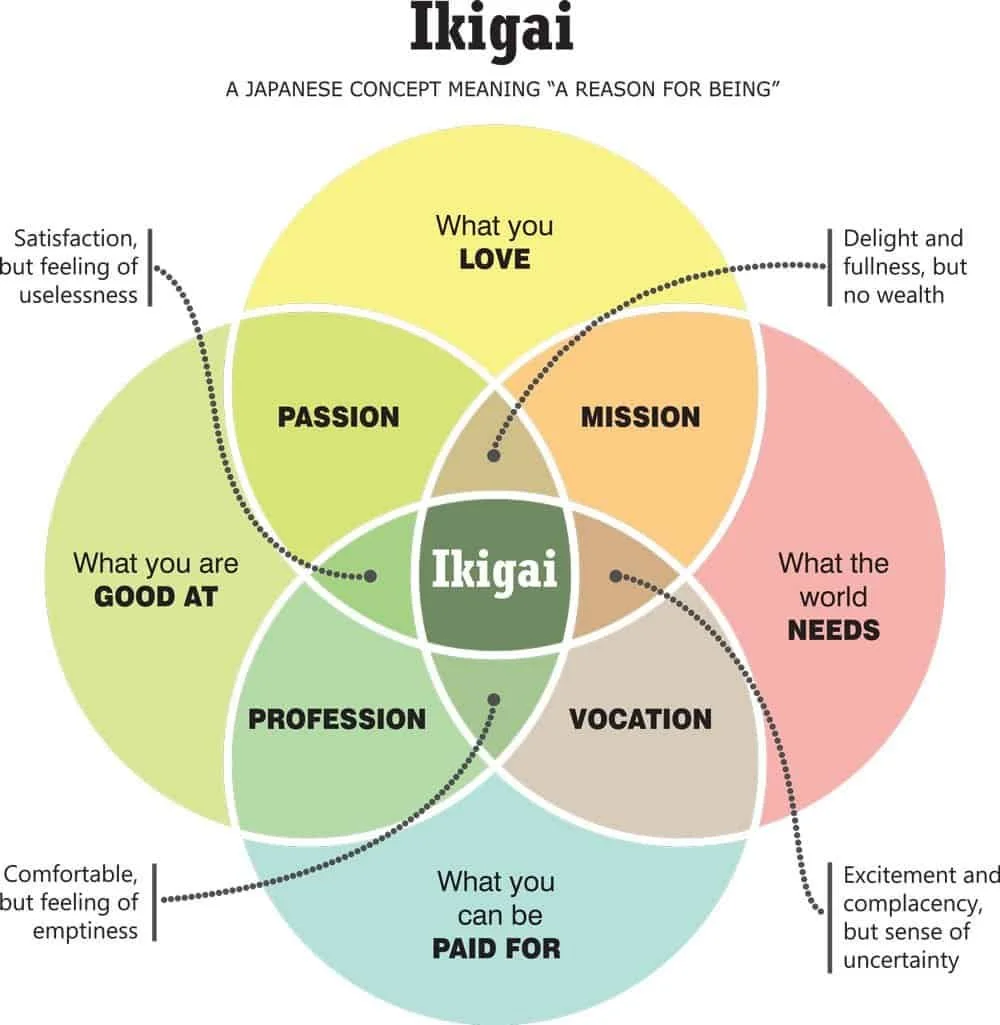
Ikigai sits at the intersection of four fundamental questions:
What do you love? Your passions and what brings you joy
What are you good at? Your skills, talents, and natural abilities
What does the world need? Problems worth solving and value you can provide
What can you be paid for? Viable economic opportunities
When these four elements overlap, you've found your ikigai—a career path that's fulfilling, sustainable, and meaningful.
Step 1: Discover What You Love
Start by exploring your genuine interests without self-censorship. Ask yourself what activities make you lose track of time, what topics you read about for pleasure, and what you'd do even if nobody paid you.
Create a list of at least 10-15 things you're passionate about. Don't worry about whether they're "career-worthy" yet. Include everything from broad interests like environmental conservation to specific activities like teaching others or solving puzzles. The goal is honest self-reflection, not practical filtering.
Step 2: Identify What You're Good At
This requires both self-assessment and external perspective. List your technical skills, soft skills, and natural talents. Consider what others frequently ask for your help with and what comes easily to you that others find difficult.
Don't limit yourself to formal credentials. Maybe you're excellent at explaining complex ideas simply, naturally good at spotting patterns in data, or skilled at bringing calm to tense situations. These less obvious strengths often prove most valuable in finding your unique career fit.
Step 3: Determine What the World Needs
Look outward at problems worth solving and needs you could address. What challenges do you see in your community, industry, or the world at large? What gaps exist in current solutions? What human needs remain underserved?
This isn't about grand scale necessarily—helping small businesses manage their finances is just as valid as tackling climate change. The key is identifying genuine needs where your contribution could make a difference.
Step 4: Explore What You Can Be Paid For
Research the economic landscape honestly. What skills are in demand? What problems are organizations willing to invest in solving? What business models exist around your areas of interest?
This step grounds your ikigai in reality. It doesn't mean abandoning idealism, but rather finding viable paths to sustainability. Sometimes this requires creativity—perhaps your passion can't support you directly, but related applications of your skills can.
Step 5: Map Your Intersections
Now comes the revealing part. Draw four overlapping circles or create a Venn diagram with your four lists. Look for items that appear in multiple categories, and pay special attention to anything that touches all four.
You'll likely notice several partial overlaps. These represent different levels of fulfillment. A passion you're good at but can't monetize is a hobby. A skill that's profitable but you don't love leads to burnout. Understanding these partial overlaps helps you see what's missing from potential career paths.
Step 6: Test Your Hypotheses
Your ikigai isn't discovered in one sitting—it's refined through experimentation. Based on your mapping, identify 2-3 potential career directions that seem promising. Then test them in low-risk ways.
This might mean taking on a side project, volunteering, informational interviews, online courses, or freelance work in that area. Pay attention to how these experiments feel. Does the work energize or drain you? Do you want to learn more or do you lose interest quickly?
Step 7: Refine and Adjust
As you gain real-world experience, your understanding of each quadrant will deepen. You might discover hidden passions, develop new skills, recognize different needs, or find unexpected economic opportunities.
Treat your ikigai as an evolving target rather than a fixed destination. Revisit your mapping every 6-12 months, especially after significant life changes or new experiences. Your career planning should be responsive to your growth.
Overcoming Common Challenges
"I can't find anything in all four circles." This is common initially. Focus on developing skills in your passion areas or exploring new passions around your existing skills. Your ikigai often emerges as you build bridges between quadrants.
"The market doesn't value what I love." Look for adjacent opportunities or creative applications. Someone passionate about poetry might find their ikigai in content strategy, UX writing, or brand storytelling rather than publishing poems.
"I have too many options." A good problem to have. Prioritize based on which path offers the most growth potential, aligns with your current life circumstances, or addresses the most pressing needs you've identified.
Putting It Into Action
Once you've identified a direction that touches all four circles, create a concrete action plan. Break down the path into achievable milestones, whether that's building specific skills, gaining certain experiences, or developing your network in that field.
Remember that ikigai isn't about finding one perfect job title—it's about understanding the elements that create meaning and fulfillment for you, then seeking opportunities that honor those elements.
The beauty of using ikigai for career planning is that it prevents common pitfalls. You won't chase money while sacrificing joy, or pursue dreams without considering practicality. Instead, you'll move toward a career that integrates all the dimensions of a life well-lived.
Start your ikigai exploration today. Our free ikigai template can be downloaded here. The clarity it brings might not come immediately, but each step of honest reflection moves you closer to a career that doesn't just pay the bills or follow your passion—it does both while contributing something meaningful to the world.